

Coffee Region (Salento & Cocora Valley)
Where the Palm Trees Touch the Clouds
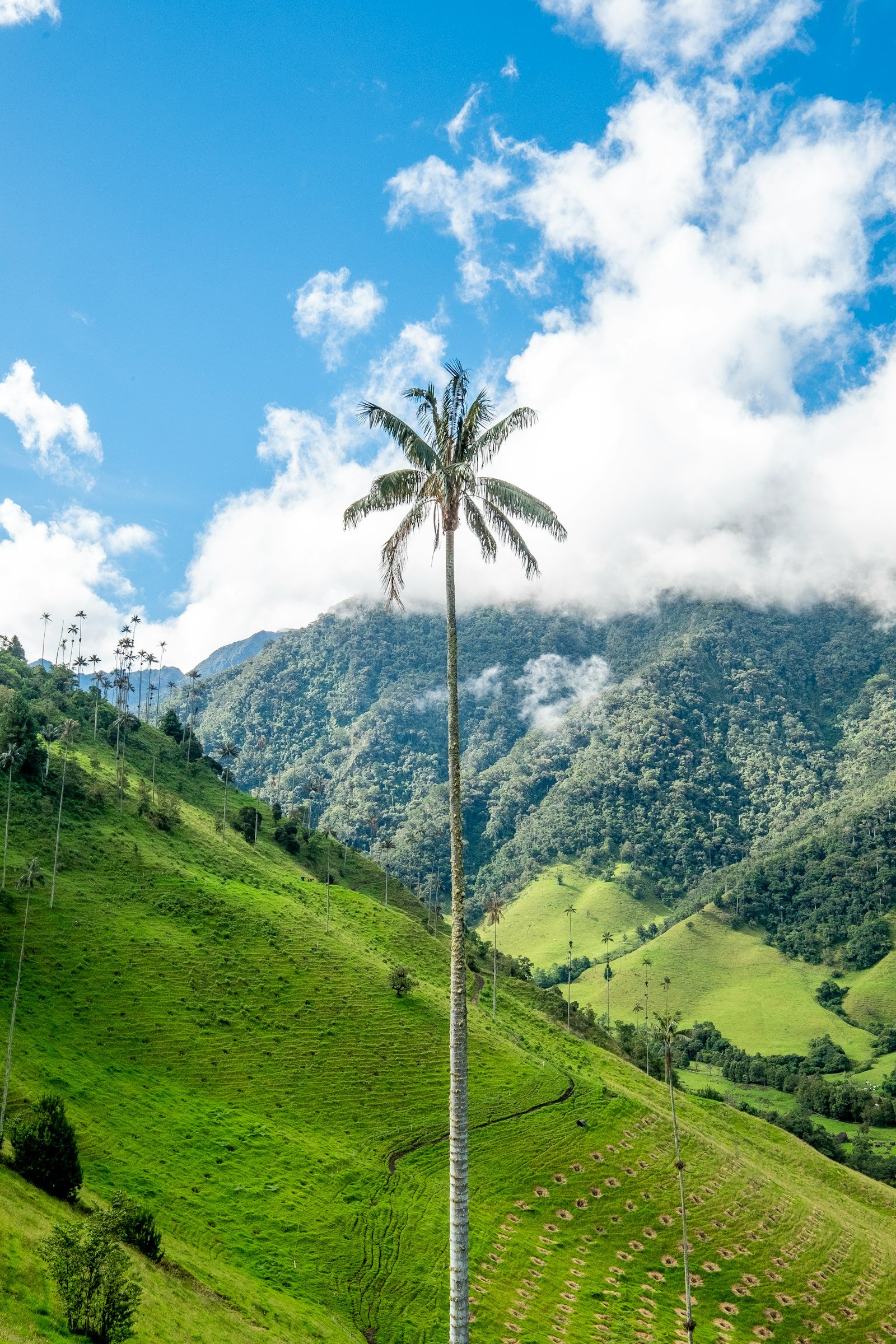
The wax palm is Colombia’s national tree, and it grows nowhere better than the Cocora Valley – skinny, impossibly tall trunks poking straight up out of a green valley floor, wrapped in cloud half the time. It’s one of those landscapes that looks digitally altered until you’re standing in it. Salento, the town that anchors the region, adds candy-colored balconies and a laid-back coffee-country pace to the mix.
What Sets It Apart
Wax palms here can grow to roughly 60 meters, making them among the tallest palm trees in the world – a genuinely strange thing to see rising out of otherwise ordinary pastureland. The whole region, Colombia’s so-called Coffee Triangle (Quindío, Risaralda, and Caldas), is UNESCO-recognized as a Cultural Landscape for how coffee farming shaped both the terrain and the culture – it’s agriculture that turned into scenery.


How to Spend Your Time
Hiking or horseback riding through Cocora Valley is the headline activity – trails wind past the palms and, for the more ambitious, climb up into cloud forest toward Acaime Nature Reserve. A working coffee farm tour is worth building into any visit; seeing the actual process from cherry to cup changes how you drink coffee afterward, no exaggeration. Salento’s main street, Calle Real, is built for slow wandering – handicraft shops, balconies, and a lookout point (Alto de la Cruz) with valley views at the top of a short climb.
What’s on the Menu
Trucha – trout, usually served with patacones (fried plantain) – is the dish most associated with Salento, since it’s farmed in the cool mountain streams nearby. And obviously: the coffee. This is one of the few places in Colombia where a genuinely excellent cup, grown a few hundred meters away, is the easy default rather than something you have to hunt for. We don’t have verified current restaurant names to recommend, so ask around once you’re there.
The Longer Story
Coffee arrived in this part of Colombia in the 19th century and, over generations, turned the region’s small family farms – fincas – into the backbone of the local economy and identity. Salento itself predates the coffee boom, founded in the 1840s, but it grew up alongside it. The wax palm’s protection as a national symbol came later, once it became clear how vulnerable a slow-growing, single-habitat tree could be.
Who’s Going to Love It
Hikers and nature lovers get one of Colombia’s most photogenic landscapes with real trails to earn the view. Coffee obsessives can go deep on origin, process, and cupping in a way most trips never allow. Slow travelers will like the unhurried, small-town rhythm. It’s a lighter fit for travelers who want nightlife or urban energy – Salento closes down early and stays that way.
The Logistics
Getting there: the nearest airport is in Armenia or Pereira, both roughly 30-45 minutes from Salento by road; from Bogotá or Medellín, that means a short flight plus a taxi or shuttle. Getting around: Salento’s famous Willys jeeps (vintage Jeep taxis, run as shared or private transport) are the classic way to reach Cocora Valley – cheap, a bit cramped, and honestly part of the experience. Weather: mild and cool year-round given the altitude, with rain likely most afternoons – bring a light rain jacket regardless of season. Safety: a relaxed, tourist-friendly area with standard precautions. Money: cash is the more reliable option for the jeeps, farm tours, and smaller shops; cards work in some restaurants in town. Opening hours: coffee farm tours typically run on set schedules, so it’s worth checking or booking ahead rather than just showing up.
How Long to Stay
Two to three days is a comfortable amount of time – one for Cocora Valley, one for a coffee farm and the town itself, and a spare day if you want to slow down further or add a second hike.
Things We’d Tell a Friend
Start the Cocora Valley hike early – the palms look best in morning light, before the clouds roll in and before the crowds arrive. Bring cash in small bills for the jeep and trail fees. Layer up; the valley sits higher and cooler than it looks in photos. And book your coffee farm tour a day ahead if you can, since the good ones do fill up.
Things That Sound Made Up
- Wax palms can reach around 60 meters tall, making them some of the tallest palm trees anywhere on Earth.
- The whole coffee-growing region is a UNESCO World Heritage Cultural Landscape – farmland recognized on the same list as ancient monuments.
- Salento’s shared taxi service still runs on vintage Willys Jeeps dating back decades, kept running rather than retired.
Good to Know


